From brief to upload
Four phases. Six gates. You pick the look, you press upload.

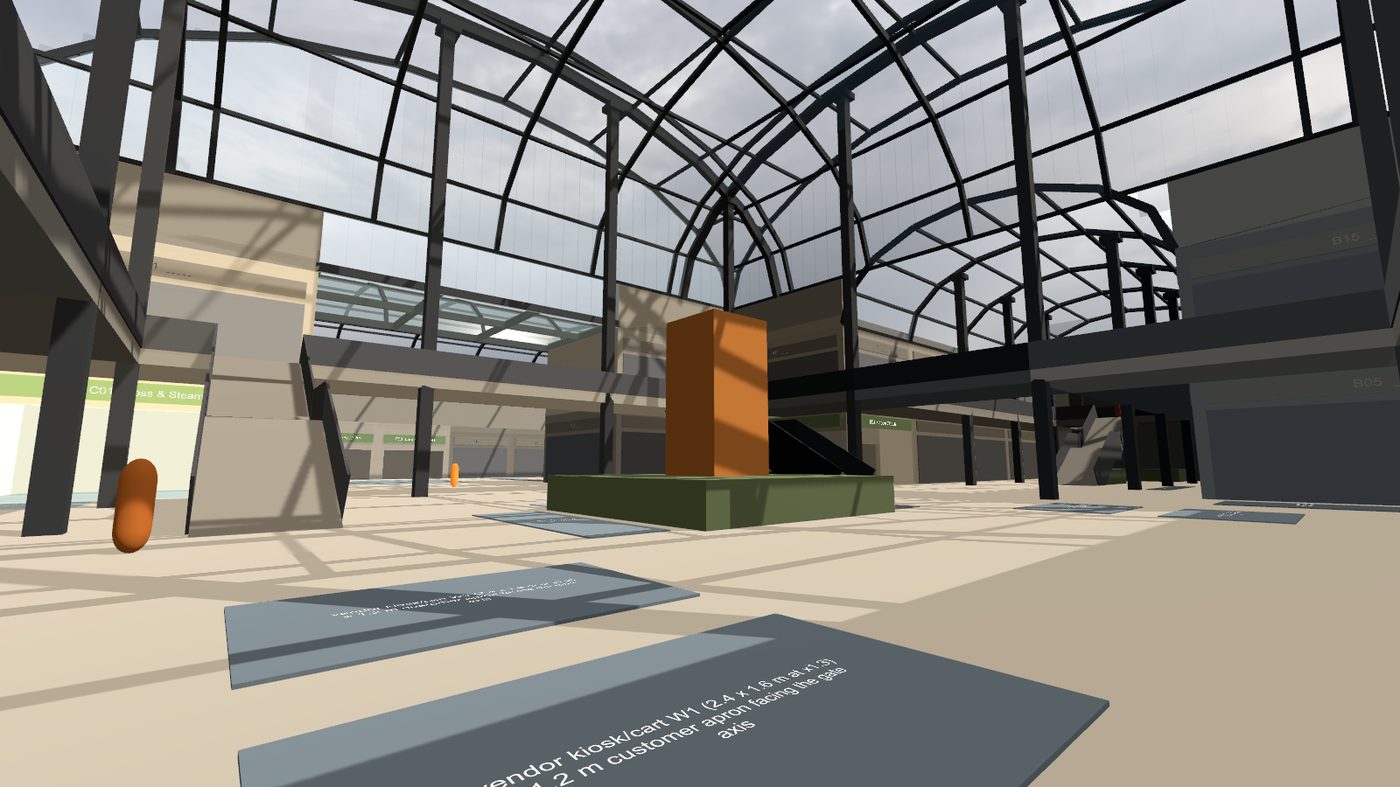
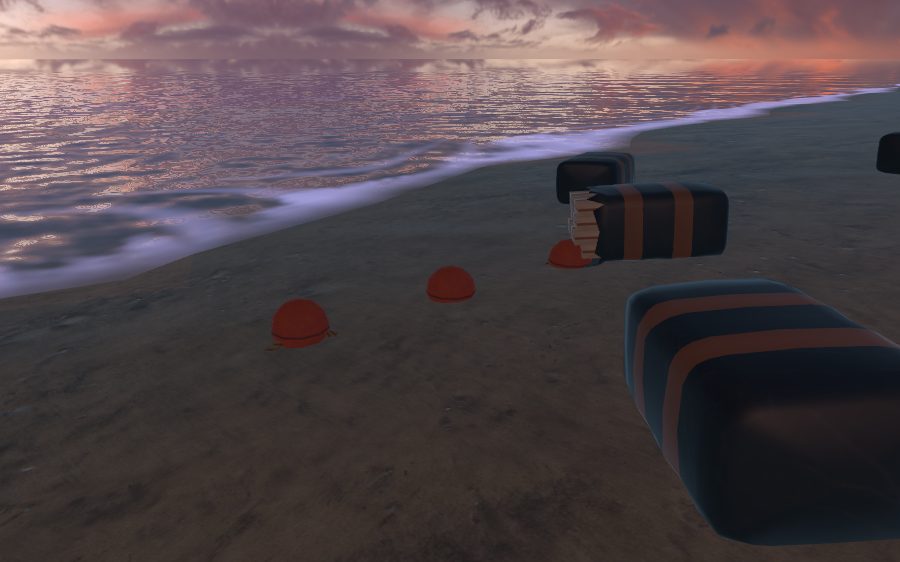

The pictures on these pages are real captures from worlds built with the kit. They show work as it was at that moment, defects included.
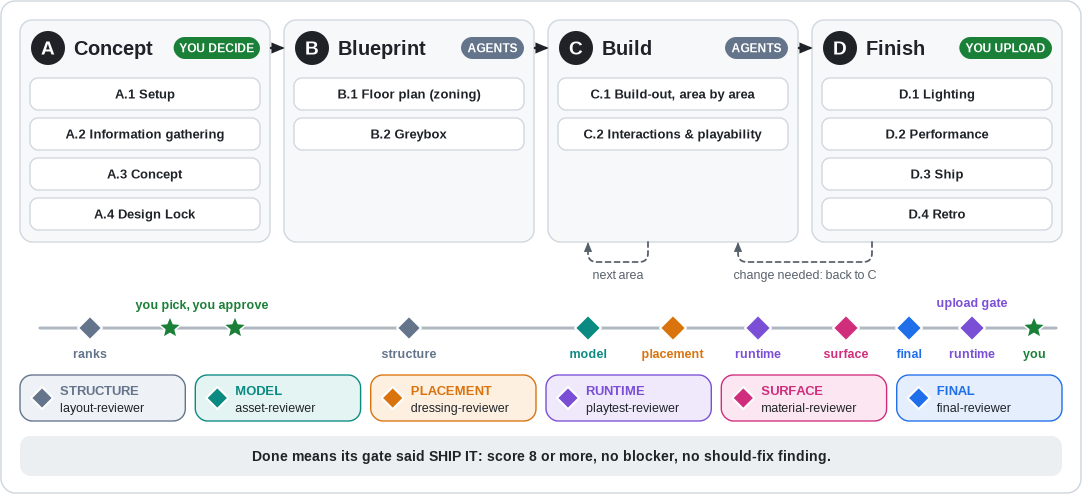
The four phases
| Phase | Stages | Who decides |
|---|---|---|
| A: Concept | A.1 Setup, A.2 Information gathering, A.3 Concept, A.4 Design Lock | you |
| B: Blueprint | B.1 Floor plan, B.2 Greybox | agents |
| C: Build | C.1 Build-out, C.2 Interactions and playability | agents |
| D: Finish | D.1 Lighting, D.2 Performance, D.3 Ship, D.4 Retro | agents, then you upload |
A change needed in phase D goes back to C, through the same gates.
Who does what
Makers build. Reviewers judge. Nobody grades their own work.
An agent is an AI assistant that can read files and run tools. The orchestrator is the one agent you talk to. It hands tasks to subagents: makers and reviewers.
flowchart TD
  you(["<b>You</b><br/>pick, approve, upload"]):::user
  orch["<b>Orchestrator</b><br/>plans, briefs, opens every sheet"]
  makers["<b>Makers</b><br/>build one pass at a time"]
  reviewers["<b>Reviewers</b><br/>judge, never fix"]:::review
  you -- your decisions --> orch
  orch -- pictures and scores --> you
  orch -- briefs --> makers
  makers -. work and measured checks .-> reviewers
  reviewers -- verdicts --> orch
  classDef user stroke:#1a7f37,stroke-width:2px
classDef review stroke:#1f6feb,stroke-width:2pxMakers
| Maker | Does | Stages |
|---|---|---|
world-architect |
concept art, shell layouts, zoning plans, greybox | A.3, B.1, B.2 |
world-builder |
builds, places, wires, lights | C.1, C.2, D.1 |
asset-finder |
finds models that already exist | C.1 |
blender-modeler |
models custom props and architecture, drapes cloth by simulation | C.1 |
| image-to-3D tool | generates shapes that need sculpting | C.1 |
perf-optimizer |
measures, then applies reversible fixes | D.2 |
Reviewers
| Gate | Reviewer | When | Judges |
|---|---|---|---|
| Structure | layout-reviewer |
A.3, B.1, B.2 | shell layouts, zoning plans, greybox variants |
| Model | asset-reviewer |
before every import or placement | one model alone, from its file |
| Placement | dressing-reviewer |
C.1, C.2 | what each build pass placed |
| Runtime | playtest-reviewer |
C.2, D.3 | everything that runs, in play mode |
| Surface | material-reviewer |
D.1, before and after the bake | materials, shaders and textures in the scene's light |
| Final | final-reviewer |
D.1, D.2, D.3 | lighting, bake quality, final polish |
A defect seen by the wrong gate is routed to its owner. It is never scored twice.
Every stage runs one loop
flowchart LR
  plan["<b>Plan</b><br/>pass plan, logged"] --> build["<b>Build</b><br/>the plan only"] --> review["<b>Review</b><br/>verdict and score"]
  review -- "NEEDS WORK or MINOR FIXES:<br/>findings become the next plan" --> plan
  review -- SHIP IT --> next(["Next area"]):::user
classDef user stroke:#1a7f37,stroke-width:2px| Verdict | When |
|---|---|
| SHIP IT | no blocker, no should-fix finding, and a score of 8 or more out of 10 |
| MINOR FIXES | should-fix findings only |
| NEEDS WORK | at least one blocker |
- Reviewers never fix
- One agent in the Unity editor at a time
- File-only agents run in parallel
- Nobody waives a finding
Read on
- Concept: you pick the look.
- Structure: zoning and greybox, before any furniture.
- Assets: find, model, simulate or generate, then the model gate.
- Review gates: measured checks, placement, runtime, surface.
- Lighting and performance: bakes, the final gate, performance.
- Findings: what you point out never drops out.
- Done: what done means, and who uploads.